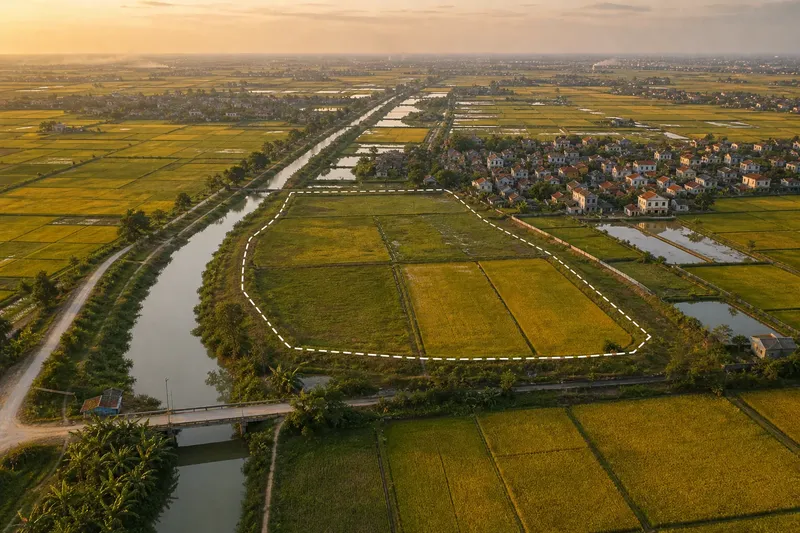
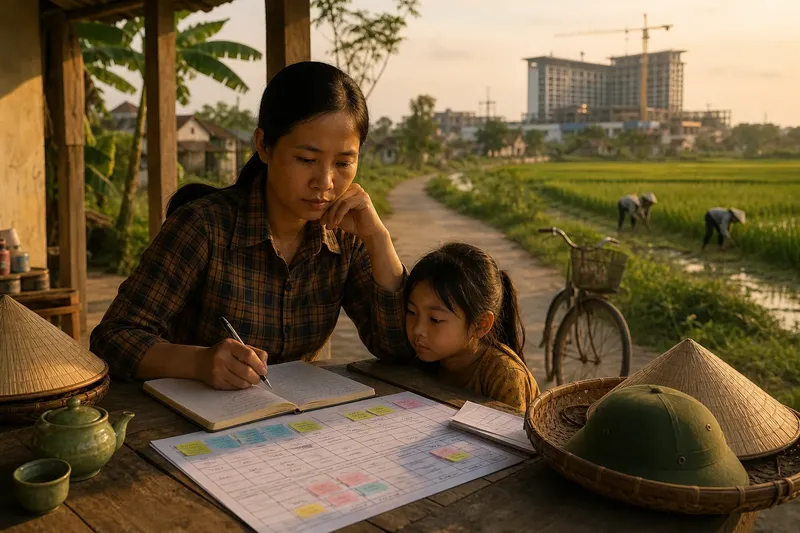
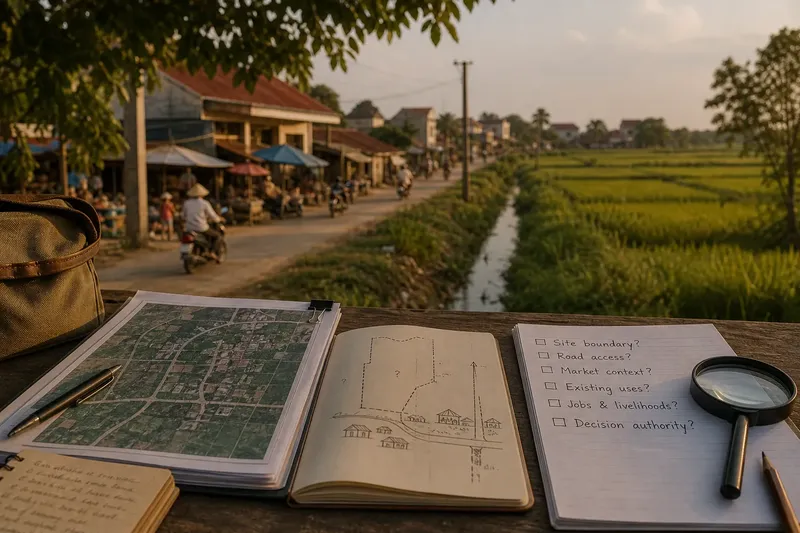
A Walk Along the Edge of a Proposed Casino Site in Thái Bình
A walk near a proposed casino site in Thái Bình can help you document local routines, rural livelihoods, and landscape details without treating a visit as proof.
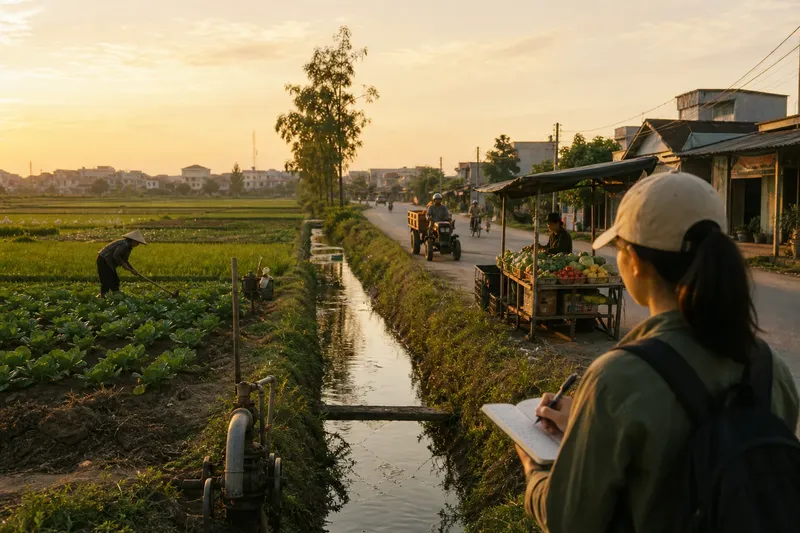
A walk near a proposed casino site in Thái Bình is most useful when it records how people move through a working landscape, not just what land looks open. Note the paths, fields, water channels, and businesses you can see, then distinguish those observations from claims about what a casino project might change.
What can a walk show about livelihoods?
Look for connections between places and activities: a route from homes to fields, a ditch beside cultivated plots, a roadside stall near a junction, or a repair shop serving passing vehicles. Describe the visible details and the conditions of your visit without guessing who owns a site, how often it is used, or what it earns.
That distinction matters because a rural landscape is more like a well-used kitchen table than a blank surface: each visible item may serve a purpose that is not obvious at a glance. Record what prompted your question, then seek the answer from people who use the area or from suitable local records.
Which details should you record?
- Fields and gardens: If you see crops, tools, or active work, record the location and visible activity; if the use is unclear, ask a local user before describing it as productive land.
- Water features: If a ditch, pump, or channel sits beside working land, note its position; if its purpose is unknown, check with users or relevant records rather than assigning it a function.
- Roadside movement: If carts, farm vehicles, or produce are visible, describe what is happening; if you need to know how regular the activity is, ask about routines instead of inferring frequency.
- Small businesses: If a shop, food stall, or repair service is open, note its presence; if its customer base matters to your question, ask respectfully rather than assuming whom it serves.
- Paths and entrances: If a route looks blocked, muddy, or difficult to use, record the condition; if you need to assess access at other times, ask users whether conditions vary.
- Signs of seasonal use: If a plot looks quiet during your visit, note the date and conditions; if activity may follow a seasonal routine, ask local users or consult appropriate records before calling it unused.
Each entry should lead to a decision about what you can responsibly say: describe what is visible when it is clear, and leave the point open when its meaning or regularity is uncertain. Keep notes factual and dated so a reader can tell the difference between a scene and an inference.
How can you make a focused visit?
Choose a public vantage point and stay out of fields, channels, and private property. Bring a notebook and a map for orientation; if you take photographs, avoid unnecessary images of people or private spaces.
Write short, neutral notes. “Channel beside cultivated plots” is an observation; “the project will cut off irrigation” is a prediction that needs evidence. Record the visit’s timing and conditions because visible activity can vary over the day and season.
Say you reach a public roadside and see one cultivated plot, one narrow channel, and one produce stall. You write down those three observations, then ask a nearby user whether the channel serves the plot and whether the stall sells local produce. If the person cannot confirm either connection, your notes keep both questions open; they do not turn the visible proximity into proof.
What can a walk establish about a casino proposal?
A visit can identify questions about land use, access routes, water features, local services, and the people whose routines may intersect with a proposed site. It cannot, on its own, establish that a casino would replace agriculture, create particular jobs, or affect nearby households in a specific way.
Match each question to the source that could address it. A question about land boundaries calls for relevant plans or official records; a question about local routines calls for respectful conversations with people who use the area. Keep distinct accounts distinct rather than presenting one person’s view as a community-wide position.
What questions should you ask after a site visit?
Can one visit show whether a field is regularly farmed?
It can show visible signs such as crops, tools, or people working at that moment. If the seasonal or usual pattern matters, ask local users or consult suitable records before drawing a broader conclusion.
Can I tell who owns a field or channel?
No; appearance alone does not establish ownership or legal use rights. Check relevant official records, and consult a qualified professional if those details affect a consequential decision.
What should I write if nobody is working?
Record that no work was visible at the time of your visit, along with the date and conditions. If you need to know whether the place is used at other times, ask users about their routines rather than calling it unused.
How should I assess a claim about future effects?
Separate the claim from your observations and identify what could confirm or challenge it, such as project documents or local testimony. For significant planning or property questions, contact the responsible authority or a qualified professional.
Which follow-up questions are useful?
Ask open, specific questions: Who relies on this channel? How do people reach the fields? Do nearby businesses serve local residents, passing traffic, or both? Which parts of the landscape change with farming seasons? If no one can answer, record that as an unresolved question rather than supplying a guess.
A walk near a proposed casino site in Thái Bình can sharpen a discussion of rural livelihoods when it documents the routes and routines that make the landscape legible. Before using a note in a report or public discussion, label it as an observation, an account from a source, or an unresolved question; that small distinction helps others judge what the evidence actually supports.